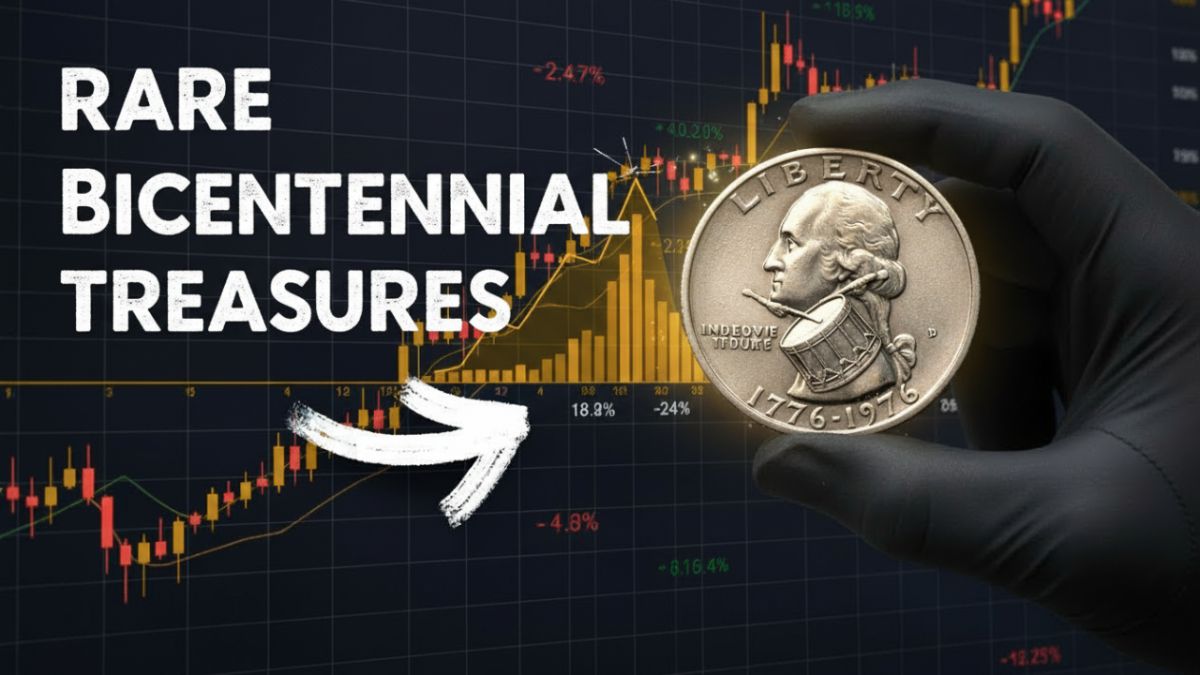
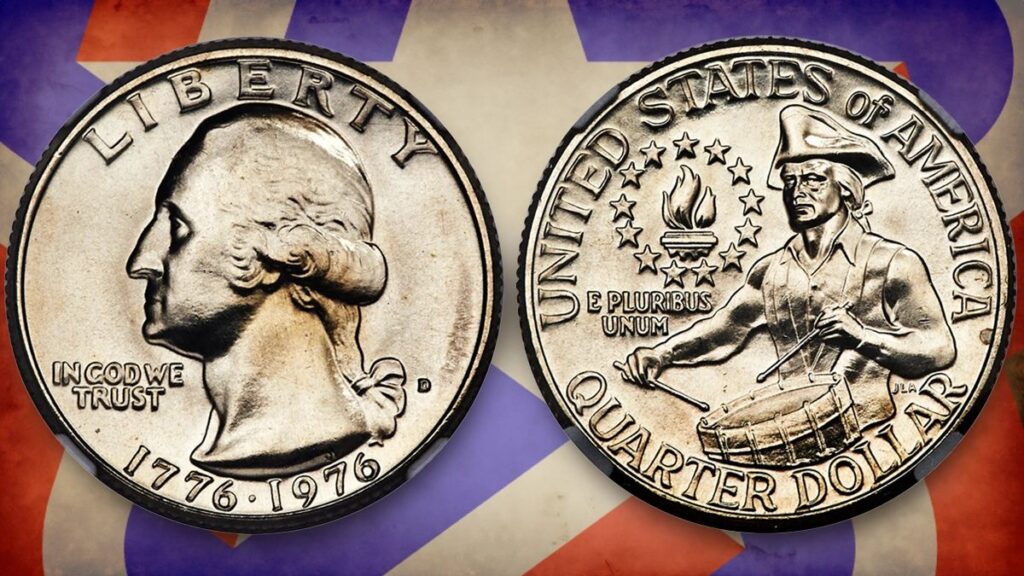
The 1976 Bicentennial quarter is considered one of the most memorable coins ever issued in American history. It was created to commemorate the 200th anniversary of American independence. Because of this, its design is quite different from a standard quarter. While a typical quarter features an eagle on the reverse, this special coin depicts a colonial drummer with a torch and stars. The obverse features the traditional image of George Washington, but the date is inscribed as 1776–1976.
For most people, this coin is simply a commemorative item worth no more than 25 cents. However, for coin collectors, some extremely rare Bicentennial quarters are considered priceless treasures. One particular example is rumored to be worth nearly $3 million.
Table of Contents
History of the Bicentennial Quarter
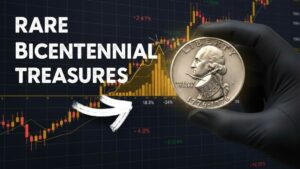
In the mid-1970s, the U.S. Mint decided to issue special designs for the quarter, half dollar, and dollar coins to commemorate the nation’s 200th anniversary. These coins were minted in vast quantities and released into general circulation.
However, in addition to the regular circulation coins, the Mint also produced some special collector’s editions and proof coins. At the time, no one could have imagined that some of these coins would later become incredibly valuable.
Why are most Bicentennial quarters common?
Most Bicentennial quarters were made from a copper-nickel alloy. They were minted in the millions at various mints, which is why they are still readily available today.
Therefore, a typical Bicentennial quarter found in your pocket is usually only worth its face value. The real difference in value comes from coins with metal errors, minting errors, or exceptional condition.
The Rare Qualities That Drive a Coin’s Value to Millions of Dollars
The Bicentennial quarter that was valued at $3 million possessed some extremely special and rare qualities. Such coins were never intended for general circulation.
Collectors typically look for:
- Coins struck on the wrong metal
- Experimental or transitional metal errors
- Exceptionally high-quality proof coins
- Coins that have received top grades
In some cases, quarters were accidentally struck on silver or another experimental metal. These coins weigh, sound, and look different from regular quarters. When only one or two such examples exist, their value skyrockets.
What are Silver Bicentennial Quarters?
While most Bicentennial quarters were made of copper-nickel, the U.S. Mint also produced quarters containing 40 percent silver. These coins were not intended for general circulation but were sold as part of special collector sets.
Silver quarters are slightly heavier and have a softer, brighter luster. While these coins are valuable, they don’t typically reach the million-dollar mark unless they possess an extraordinary error or are in exceptional condition. The $3 million coin is likely attributed to a unique error or experimental strike.
Minting Errors That Make a Coin Extremely Rare
Minting errors are among the most exciting discoveries for coin collectors. These occur when something goes wrong during the manufacturing process, such as the use of the wrong metal or a mistake in the die preparation.
Valuable errors in Bicentennial quarters can include:
- Off-metal strikes
- Double die obverse or reverse
- Struck on the wrong planchet
- Prototype or test strikes
Because the minting process is tightly controlled, such errors rarely make it out into circulation. But when they do, they become instant treasures.
How to Identify a Valuable Bicentennial Quarter?
Identifying a rare coin requires patience and attention to detail. Collectors typically examine the following:
- Weight, which may differ from a standard quarter
- Unusual color or surface
- Sharp and crisp design details
- Signs of doubling or misalignment
Using a digital scale and magnifying glass and comparing it to certified examples can be helpful. However, professional authentication is crucial for any high-value claims.
Where are Rare Bicentennial Quarters Found?
Sometimes the most valuable coins are found in the most unexpected places. Old collections, estate sales, or forgotten sets stored in bank vaults have yielded such coins.
Many people simply kept these coins as mementos. Decades later, those same coins, upon re-examination, proved to be priceless.
What to Do If You Think You Have a Rare Coin?
If you suspect you have a special Bicentennial quarter, proper handling is essential.
- Handle the coin only by its edges.
- Do not clean or polish it.
- Store it in a secure holder.
- Have it examined by a reputable dealer or grading service.
Professional grading not only verifies authenticity but also establishes market value.
Why Do Collectors Pay Millions of Dollars?
For collectors, these coins are not just pieces of metal but pieces of history. These are coins that perhaps should never have been minted. Their rarity and the story behind them make them invaluable.
For high-level collectors, such coins represent prestige, history, and uniqueness.
Final Thoughts
The sale of a 1976 Bicentennial quarter for $3 million is proof that extraordinary value can be hidden in seemingly ordinary objects. Most such coins are common, but a select few become historical artifacts due to rare minting errors, unique metal composition, and exceptional condition.
If you carefully examine old coins, expand your knowledge about them, and have them authenticated by the right expert, a seemingly ordinary memento might just turn out to be a significant discovery.
FAQs
Q. What makes a 1976 Bicentennial quarter valuable?
A. Most are common, but rare versions with minting errors, wrong metal, or exceptional condition can be extremely valuable.
Q. Are all Bicentennial quarters made of silver?
A. No. Most are copper-nickel. Only special collector editions were made with 40 percent silver.
Q. Can a Bicentennial quarter really be worth $3 million?
A. Yes, but only in extremely rare cases involving unique errors or experimental strikes verified by experts.
Q. How can I check if my quarter is rare?
A. Look for unusual weight, color, errors, or sharp details, and get it professionally graded.
Q. Should I clean an old Bicentennial quarter before selling it?
A. No. Cleaning can reduce its value significantly and damage the coin.